

David Jones Reports Strong Trading as Its Future Hangs in the Balance

November 9, 2026

Share this article

Retail store promo showing AI + RFID smart checkout with a woman scanning an item at a self-checkout terminal

Key trends driving the future of retail technology include:

  • AI-driven operations that optimize decision-making and streamline workflows 
  • Smart checkout solutions that reduce friction and improve customer convenience 
  • RFID-enabled inventory visibility for greater accuracy and supply chain efficiency 
  • Seamless customer journeys that connect online and in-store experiences 
David Jones Reports Record Trading as Its Future Hangs in the Balance

9 November 2026 | Retail Industry Insights

Just four days after entering voluntary administration, David Jones is reporting record levels of customer traffic and sales.

Receivers FTI Consulting confirmed on 9 November that trading had been strong across stores and online since their appointment. Replenishment orders are being placed ahead of Christmas, and the 188-year-old department store continues to operate across Australia and New Zealand.

Despite the encouraging response, questions remain over the retailer's financial position, store network and long-term viability.

What Australians Are Saying About David Jones


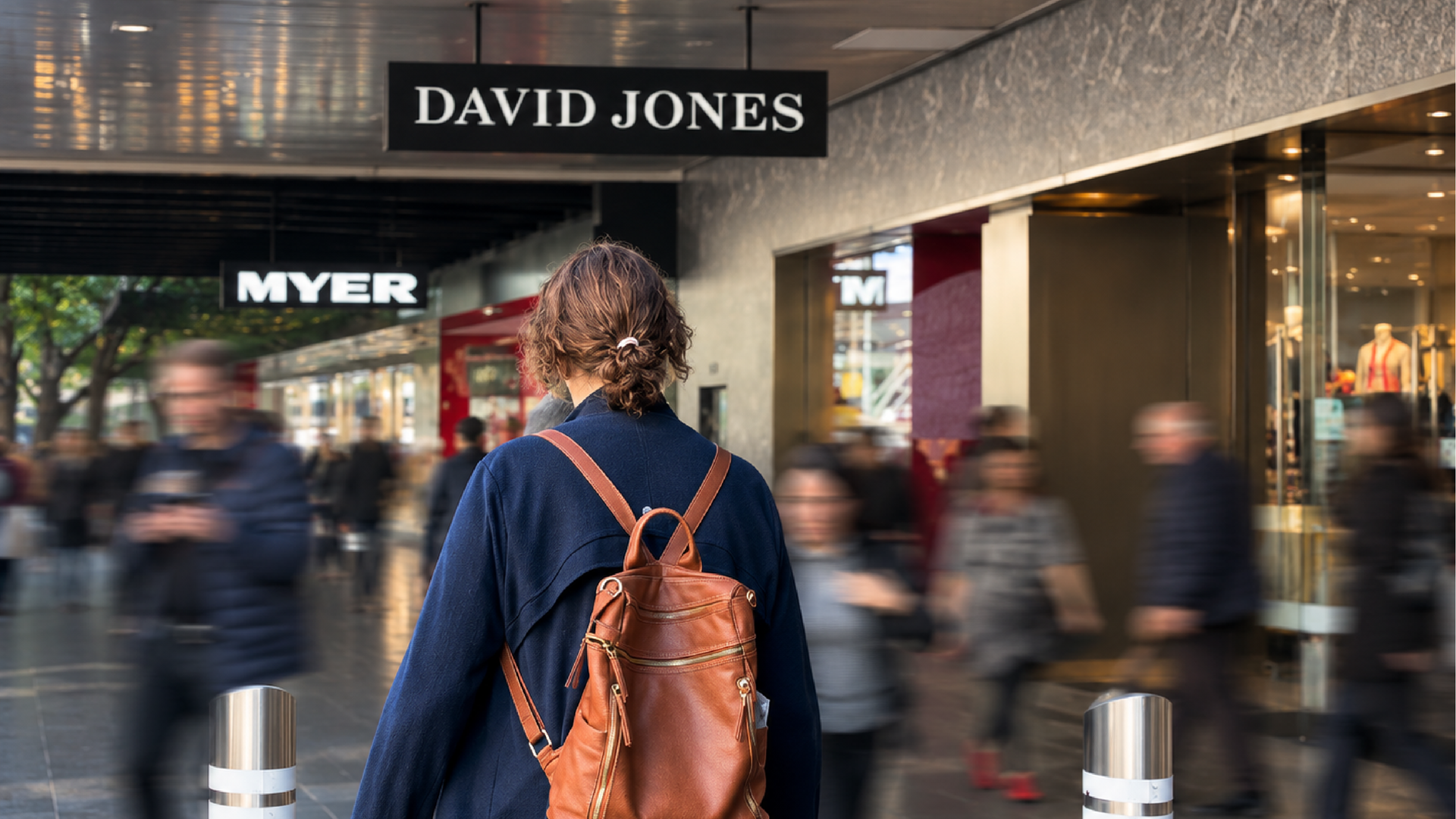
Following the announcement, the Retail Show Australia team took to the streets to speak with shoppers and passers-by about the news.

Some recalled their experiences with David Jones, while others expressed disappointment at the retailer's difficulties and hope that the business would recover.

Their responses reflect the place David Jones has occupied in Australian retail for generations. Few department store names have the same history or public recognition.

Yet recognition alone cannot guarantee commercial success. The recent trading surge demonstrates customer interest, but without detailed sales comparisons or profitability figures, it is too early to assess whether that demand can be sustained.

For David Jones, maintaining its appeal to shoppers is only one part of the challenge.

The Economics of the Department Store Model


Financial pressures have been building across the business well before the appointment of administrators.

Large department stores carry substantial property, staffing and inventory costs. Meanwhile, online marketplaces, discount retailers and brands operating their own stores have changed the competitive environment.

David Jones faces the additional challenge of maintaining its premium positioning. Customers expect quality merchandise, knowledgeable staff and an enjoyable shopping experience, all of which require significant investment.

Property costs are particularly relevant to its restructuring.

Scentre Group reported on 4 November that David Jones occupies approximately 200,000 square metres across 17 Westfield destinations. Annual gross rent attributable to Scentre's ownership share totals A$45 million.

Those figures illustrate the scale of the retailer's property commitments, although they do not establish the profitability of individual stores.

Shopping centre operators are also finding alternative uses for large retail spaces. At Westfield Tuggerah, former David Jones space is being redeveloped for JD Sports, rebel and entertainment operator Timezone.

Decisions about store size and location will therefore matter as much as changes to product assortment or customer service.

Any restructuring must address operating costs without undermining the premium experience that gives shoppers a reason to choose David Jones.

Supplier Relationships Under Pressure


Uncertainty surrounding the business has also affected its suppliers.

Australian brands have reported delayed invoice payments, raising concerns about outstanding debts and future trading arrangements. Some have withdrawn merchandise since the administration began.

According to the receivers' latest update, replenishment orders are being placed with suppliers that have agreed to continue trading.

Securing those arrangements is particularly important ahead of Black Friday and Christmas, when merchandise availability and customer confidence become critical to retail performance.

For smaller suppliers, the consequences extend beyond David Jones. Unpaid invoices can affect cash flow, production commitments and the ability to finance future orders.

Restoring stable supplier relationships will be essential to maintaining the range of brands and products customers expect from the department store.


What Comes Next for David Jones?


While David Jones works through its restructuring, the wider Australian retail market offers a different picture of physical shopping.

Scentre Group recorded 452 million customer visits across its Westfield destinations between the beginning of 2026 and 1 November, an increase of 3.2% over the comparable period last year. Portfolio occupancy reached 99.8%, its highest level in more than a decade.

Demand for shopping destinations remains strong, although this does not mean every retailer or store format is performing equally well.

David Jones now faces decisions about its future ownership, store network and operating model. Administrators McGrathNicol are seeking potential recapitalisation or sale options, while FTI Consulting continues to oversee day-to-day trading.

Recent sales activity provides some encouragement, but a lasting recovery will depend on improving store economics, maintaining the brand's appeal and rebuilding confidence among suppliers and other commercial partners.

For one of Australia's longest-established retailers, the challenge is to preserve what customers value while developing a business that can continue to deliver it profitably.

Recent Posts

Woolworths storefront with a shopper and cart beside text: “Next growth strategy: more stores, smarter operations.”
November 20, 2026
Woolworths plans 60+ Australian Food stores by FY2029, alongside store renewals and technology investment. Explore retail technology opportunities at RSA 2027.
October 30, 2026
Australia's Black Friday 2026 sales are forecast to rise. Explore how inflation, early Christmas shopping, discounts and fulfilment costs affect retail margins.
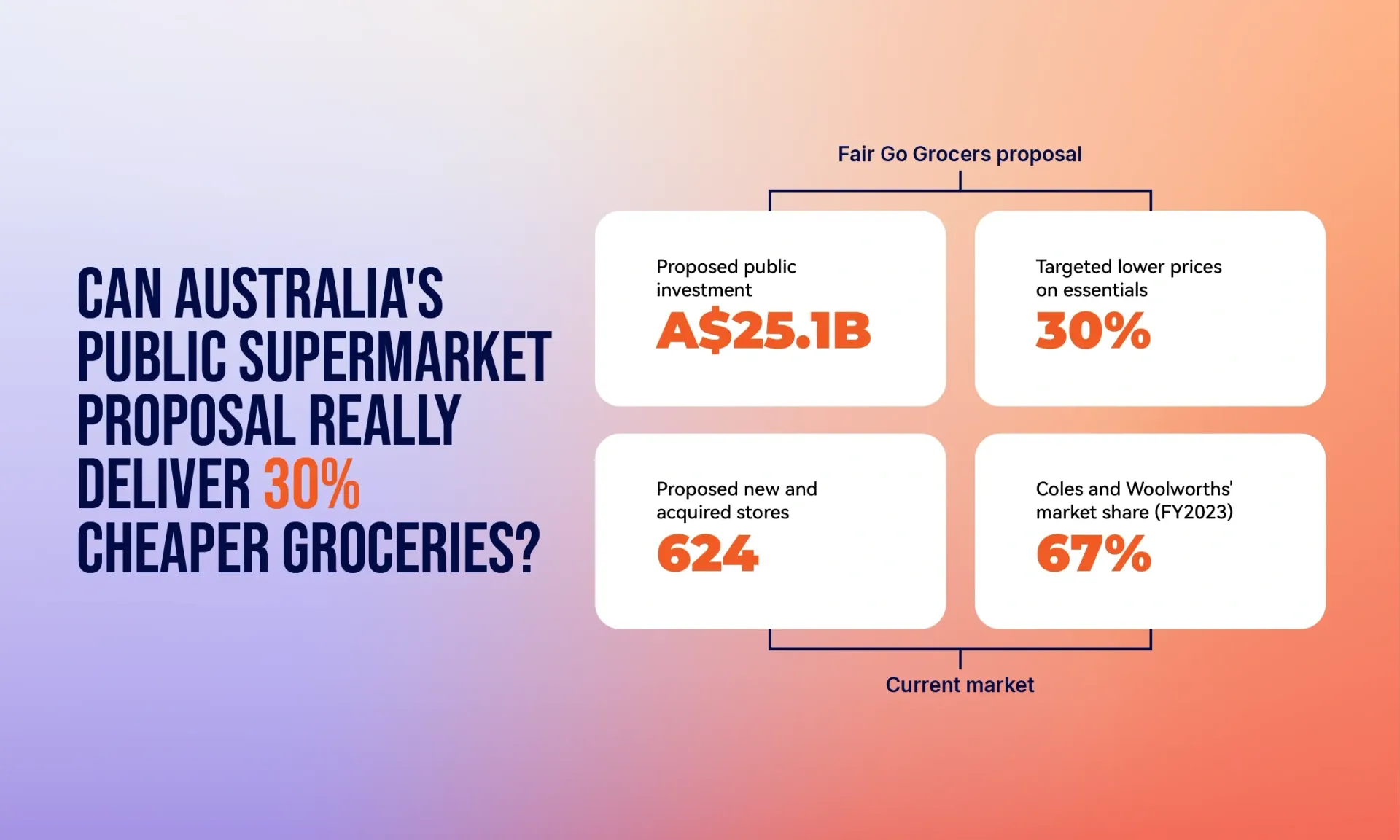
Infographic asking if Australia’s supermarket proposal could really deliver 30% cheaper groceries, with four stats.
October 21, 2026
Can Fair Go Grocers cut grocery prices by 30%? Explore Australia's proposed public supermarket model, retail competition and the economics behind it.
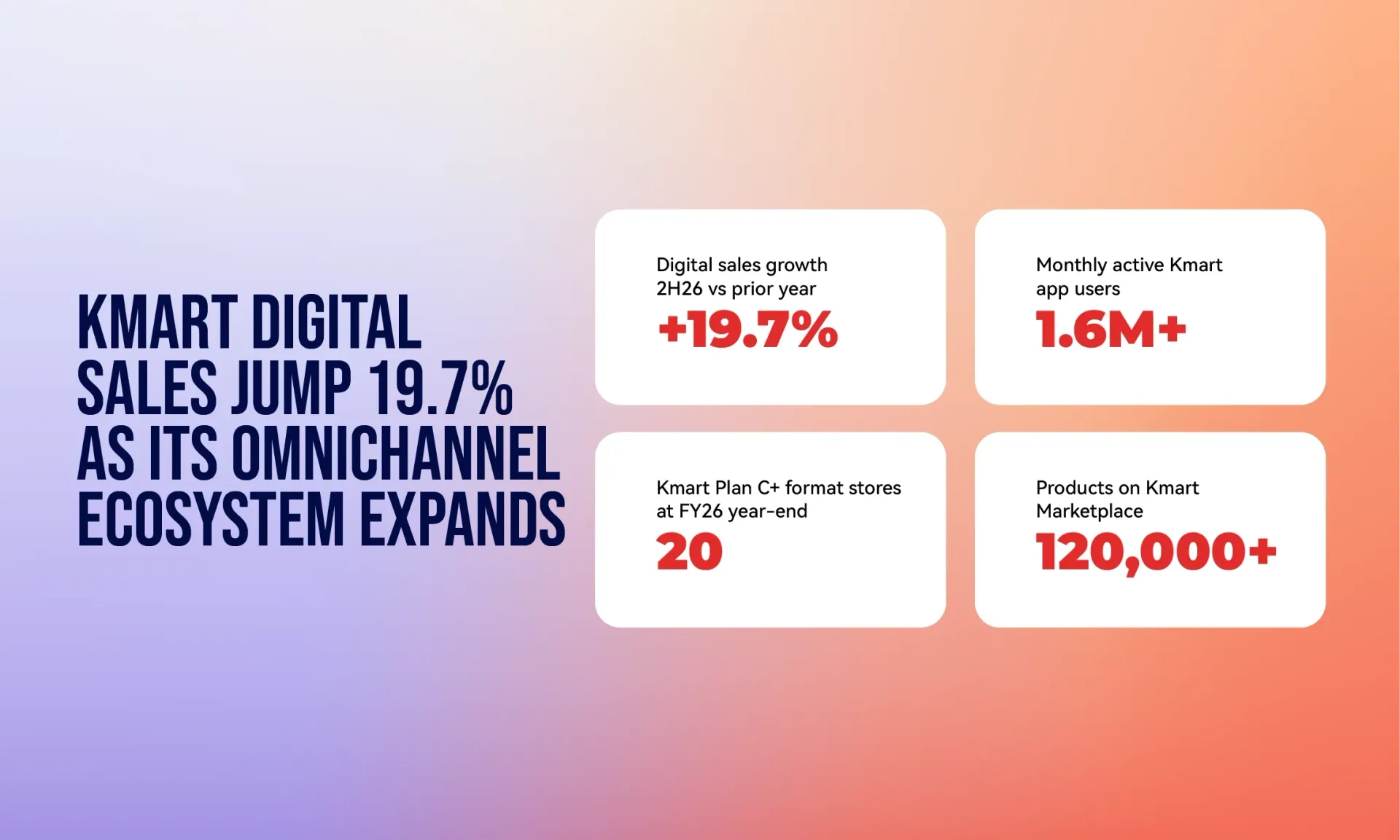
Kmart Digital sales jump 19.7% as omnichannel ecosystem expands, with four red-on-white stats tiles.
September 6, 2026
Kmart FY26 highlights a more connected retail model as digital growth, AI, RFID, stores, fulfilment and supply-chain technology increasingly work together.
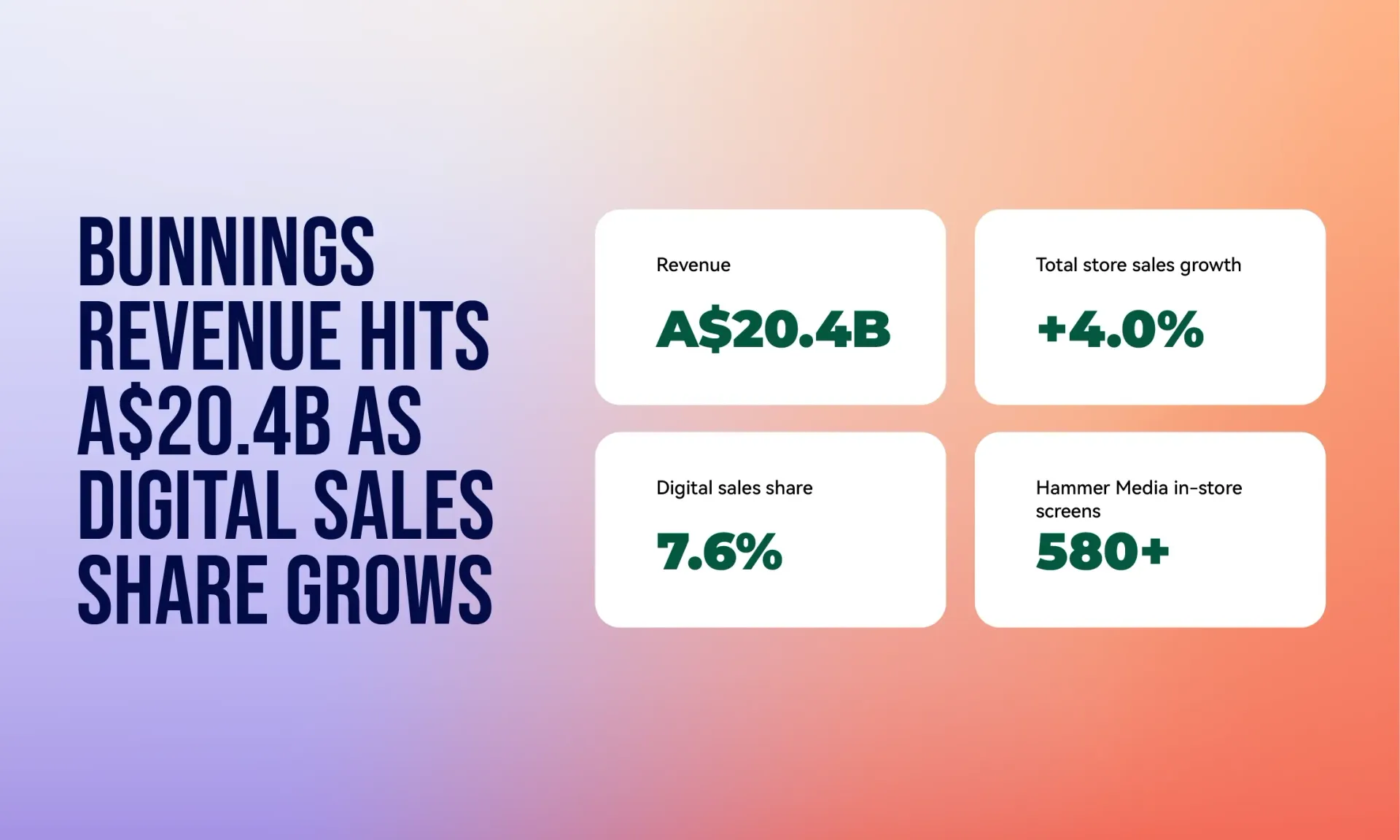
Bunnings revenue hits A$20.4B as digital sales share grows, with four KPI boxes on a pink-orange gradient.
September 5, 2026
Bunnings FY26 revenue reached A$20.4 billion as digital sales grew to 7.6% of total sales, highlighting the closer connection between stores and digital retail.

Smiling woman in black dress beside event poster on a purple-orange gradient background
September 5, 2026
SaCSA leaders Natalie Turmine and Nicole Venter join Retail Show Australia 2026 to explore retail skills, workforce gaps, AI, automation, and future capability.
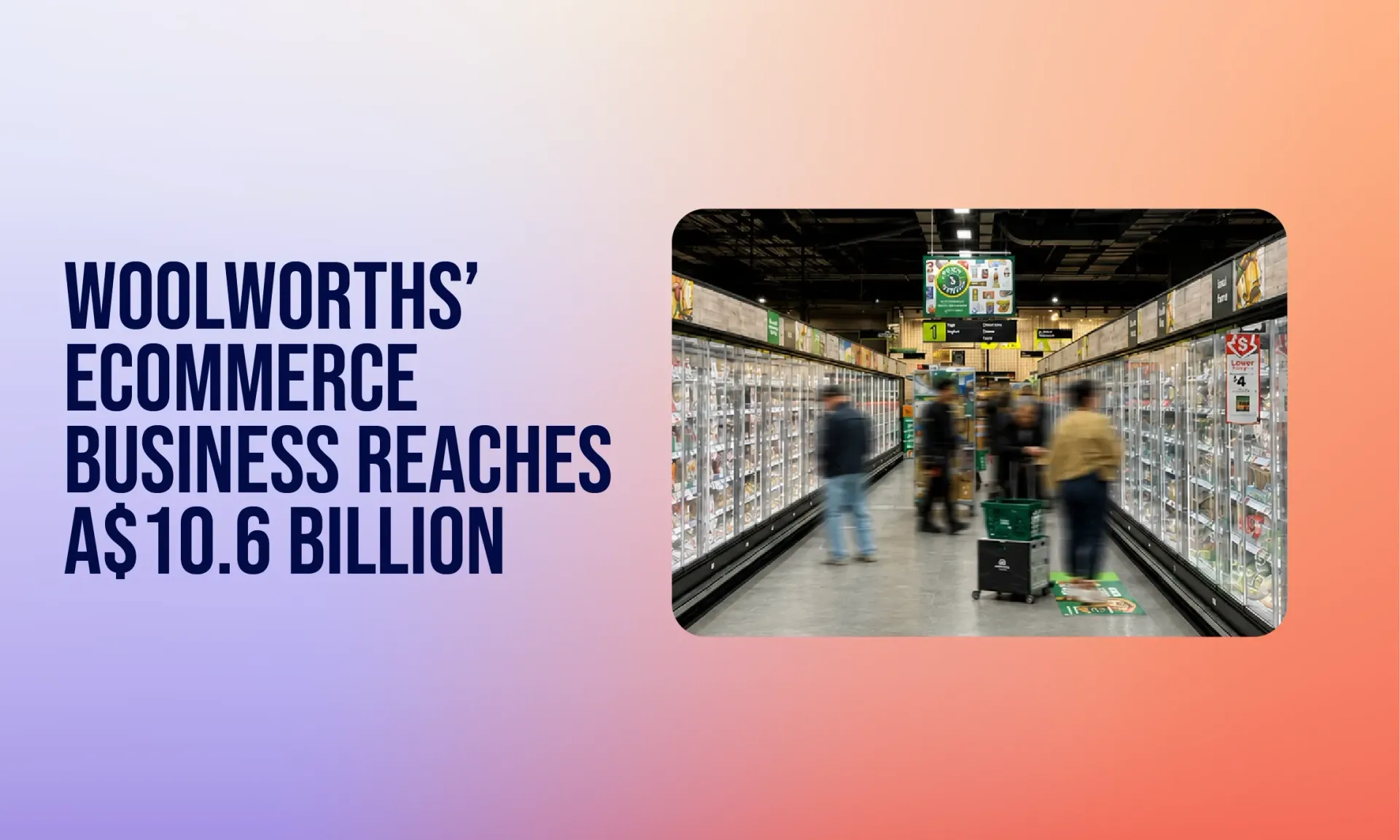
Woolworths e-commerce business reaches $10.6 billion, with shoppers in a supermarket aisle.
September 4, 2026
Woolworths eCommerce sales reached A$10.6 billion in FY26, rising 15.9% as online grocery becomes increasingly integrated with stores and fulfilment.
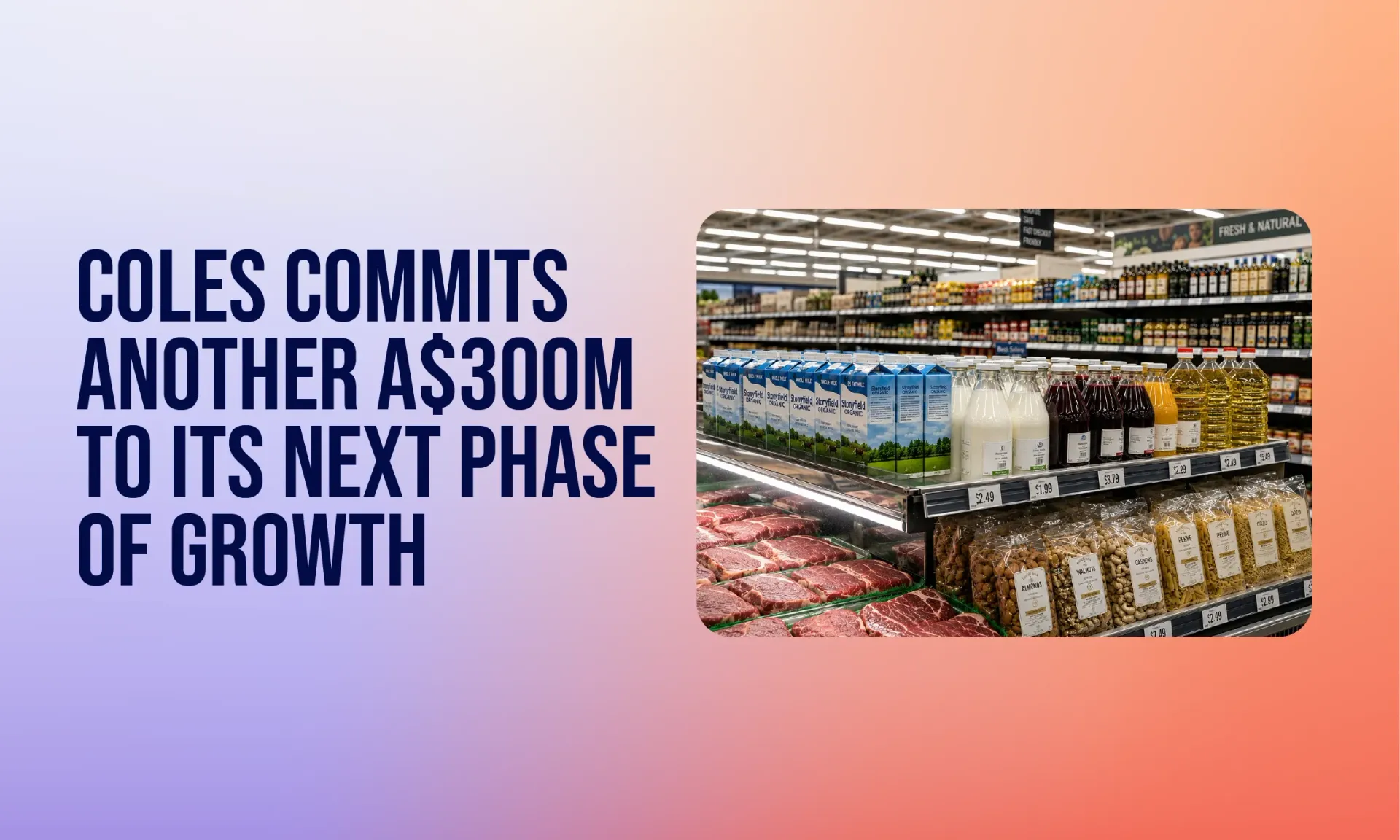
Coles store interior with headline announcing another A$300m investment in next growth phase
September 4, 2026
Coles is investing another A$300 million in new stores, renewals, online fulfilment, automation and technology as it prepares for its next phase of growth.

Storepro logo in black text with a green circular “o” on a white background
September 3, 2026
Storepro joins Retail Show Australia 2026 to showcase retail construction and fitout expertise across new stores, refurbishments, rollouts, and ongoing works.

Retail Show Fireside Chat banner with two speakers and text: “From Data to Action: The Retail Advantage Hidden in Sustainability Data”
September 3, 2026
David Jones and Schneider Electric join RSA2026 to explore how sustainability data can guide store performance, capital planning, and smarter retail investment.

Show More