
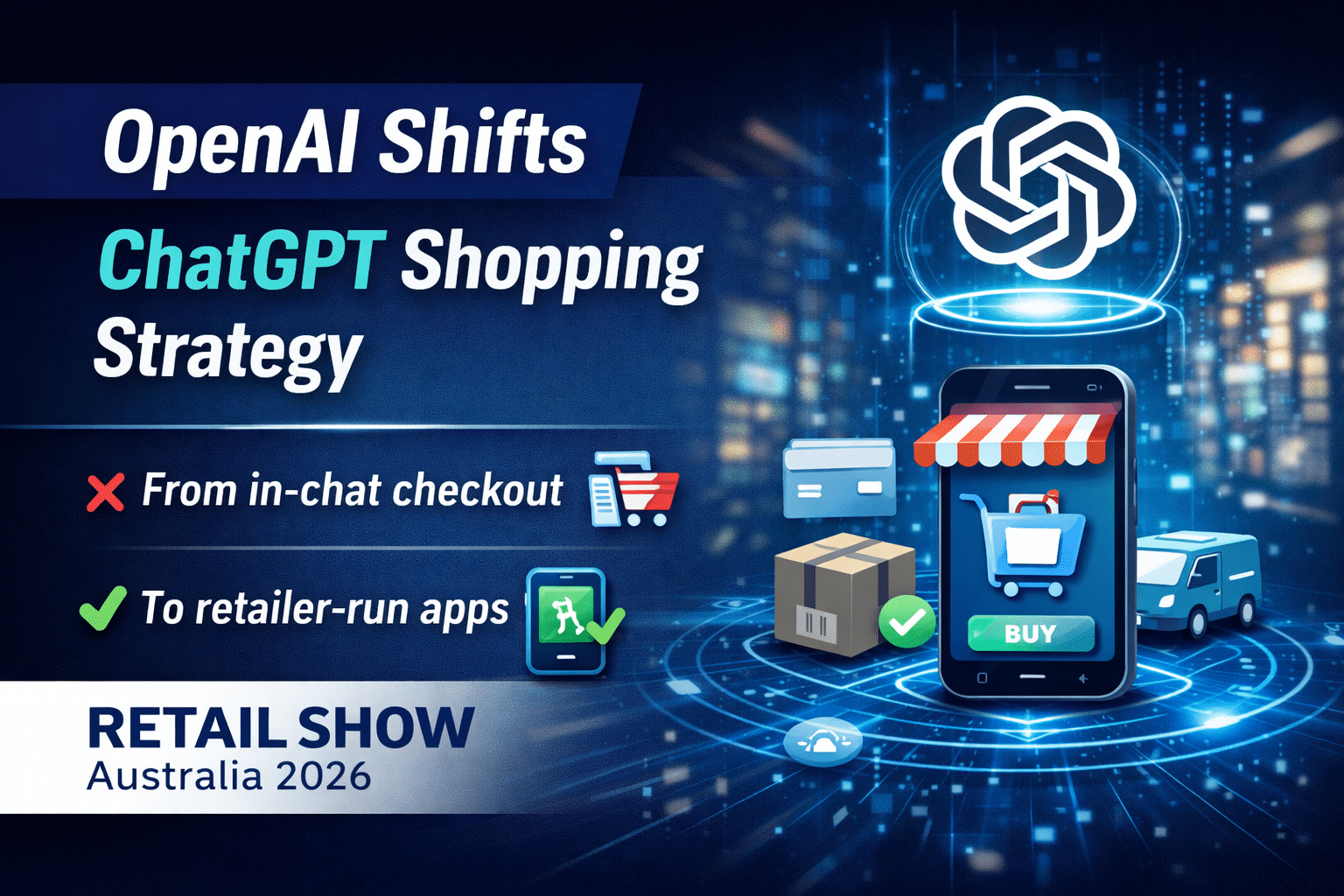
OpenAI Shifts ChatGPT Shopping Strategy Toward Retailer-Run Apps
OpenAI Reportedly Pulls Back from In-ChatGPT Checkout in Favour of Retailer-Controlled Shopping Experiences
OpenAI is reportedly changing direction in its e-commerce strategy, moving away from plans to let shoppers complete purchases directly inside ChatGPT and instead shifting toward retailer-run apps and retailer-managed checkout experiences.
The move reflects a broader reality in AI commerce: while conversational AI is proving useful for product discovery, comparison and recommendation, the final step of purchase still appears to work better when retailers retain greater control over the transaction, customer data and fulfilment journey.
Why OpenAI Is Reconsidering ChatGPT Checkout
Earlier ambitions around “Instant Checkout” positioned ChatGPT as a potential end-to-end shopping destination, allowing users to browse and buy products without leaving the chat interface. However, recent reports suggest OpenAI is now stepping back from that model after mixed early results and limited momentum.
One of the likely challenges is that checkout is far more complex than product recommendation. Payments, live inventory visibility, order management, fraud prevention, loyalty integration and fulfilment all require a level of retailer system control that is difficult to standardise inside a third-party AI interface. As a result, many retailers appear to prefer AI-assisted discovery paired with checkout on their own platforms. This is an inference based on how the reported pivot is being described across coverage.

A Shift from AI-First Checkout to Retailer-Led Commerce
Rather than owning the full purchase flow, ChatGPT is increasingly being positioned as a discovery layer that helps shoppers search, compare and evaluate products before being directed into retailer-operated environments to complete the transaction.
This model gives retailers more control over brand experience, pricing logic, customer relationships and post-purchase service, while still allowing them to benefit from the growing role of AI in shopping journeys. It also aligns with the way many consumers currently use generative AI: not necessarily as a replacement for retailer websites or apps, but as a faster way to narrow choices and make decisions.
What This Means for Retailers
For retailers, the reported shift is significant. It suggests that the near-term opportunity in AI commerce may not be about handing over the full transaction to external platforms, but about building stronger retailer-connected experiences that integrate with conversational AI while keeping checkout and fulfilment within the retailer’s own ecosystem.
This could create new momentum around:
- retailer-run shopping apps within AI platforms
- stronger product data and merchandising feeds for AI discovery
- tighter integration between AI recommendations and owned commerce channels
- better optimisation for conversational product search and comparison experiences
As AI shopping tools continue to evolve, retailers that invest in structured product content, responsive digital experiences and seamless app or site checkout journeys may be better positioned to benefit from the next stage of AI-driven commerce.
The Bigger Retail Trend Behind the Shift
The change also highlights a broader lesson for the retail sector: AI may influence how consumers discover products, but trust, conversion and transaction control still matter.
Rather than replacing retailer channels, AI is increasingly becoming another touchpoint in the customer journey—one that can guide decisions, surface options and reduce friction at the top of the funnel. The retailers most likely to benefit may be those that treat AI as a commerce enabler, while continuing to strengthen the owned digital environments where purchases are actually completed. This is a forward-looking interpretation supported by the reported strategy change and recent retail commentary.
Reference: Retail Insight Network, Axios, The Verge
Recent Posts